
Fu-Hsuan Tsai graduated from National Taiwan University in 2021 with a double major in economics and library & information science. She continued her academic journey at National Taiwan University and earned a master’s in economics. Fu-Hsuan is currently pursuing a PhD in Economics at Washington University in St. Louis. Her research focuses on behavioral economics, particularly gender norms and policy.
In her free time, Fu-Hsuan enjoys reading, baking, and traveling.
Scholar Voices
Global Leadership Vision Op-Ed | The Unseen Leaders: Bridging the Global Leadership Gender Gap
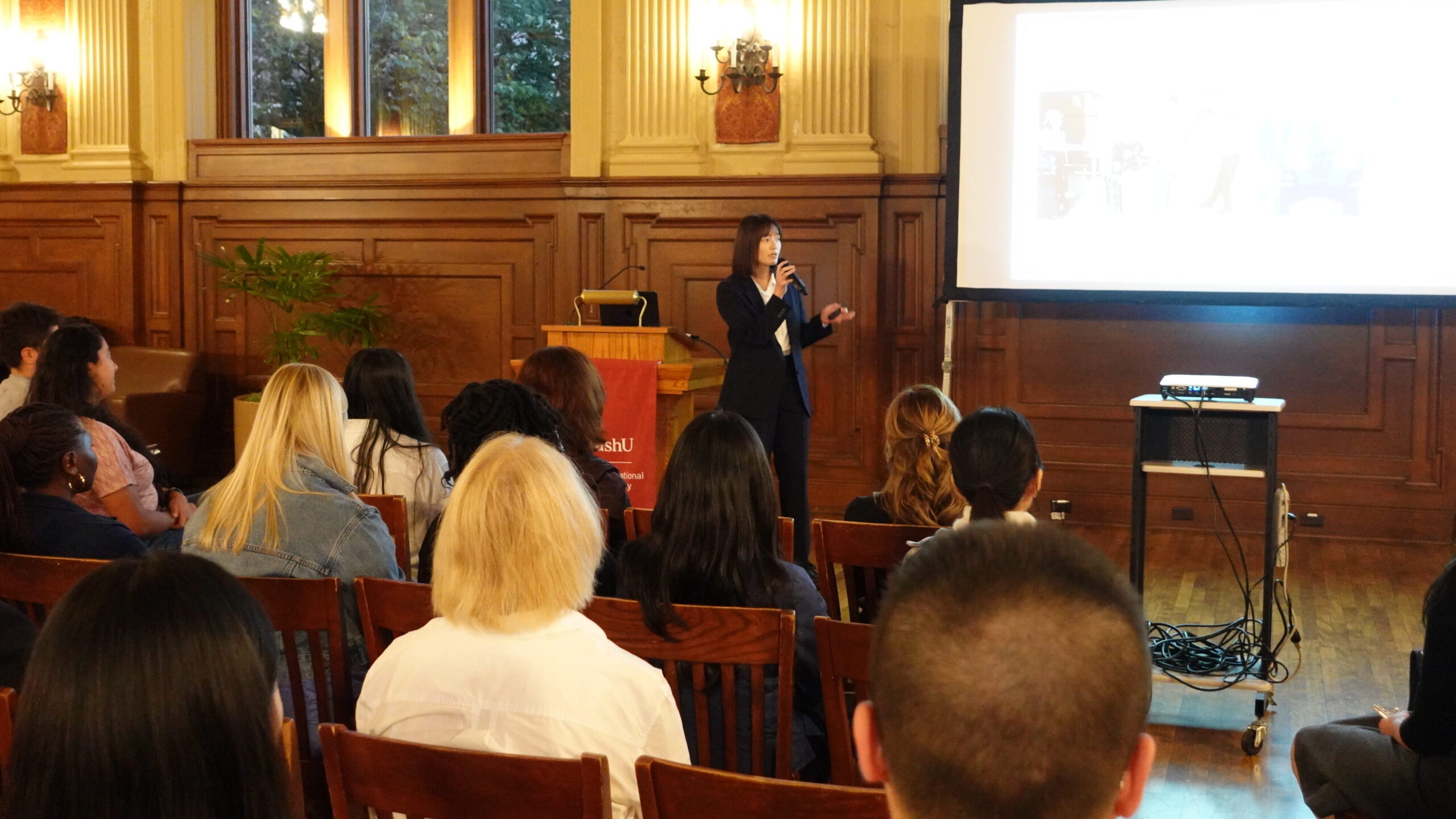
By Fu-Hsuan Tsai | October 2025
Women make up more than half of the world’s population, yet they hold only 26.9% of seats in national parliaments worldwide (IPU, 2024). This absence creates an imbalance in the policies that affect all of us.
Research shows that men and women often adopt different leadership approaches, each effective in different contexts (Paustian-Underdahl et al., 2014). This gap in representation matters because it shapes which policy issues become priorities. During the COVID-19 pandemic, for example, studies found that countries led by women were more likely to adopt stricter public health measures and achieved lower mortality rates than those led by men (Ozdenerol et al., 2023). This demonstrates that diversity in leadership is not symbolic—it has real, measurable consequences for society.
Critics sometimes claim that women are underrepresented in leadership simply because fewer women are qualified to lead. Yet the evidence does not support this view. Globally, women now outnumber men in higher education, holding more seats in universities and earning more degrees. Clearly, women are competitive in their knowledge and skills. The real obstacles lie elsewhere. Studies have shown that women are, on average, more risk-averse, less prefer competitive environments, and more sensitive to social evaluation (Croson & Gneezy, 2009; Niederle & Vesterlund, 2007; Buser et al., 2014). Combined with persistent social norms, these barriers restrict women’s pathways into leadership. The problem is not ability—it is opportunity.
Closing the leadership gap is not just about fairness for women; it benefits everyone. Greater diversity in leadership ensures that a wider range of perspectives is represented, leading to more effective and inclusive decisions. When women are empowered to lead, society could become stronger and better.