
Kwabena Boateng is a Dental Surgeon who earned both his Bachelor of Medical Sciences and Bachelor of Dental Surgery degrees from the University of Ghana in 2020. Growing up in a country where access to dental care is limited has fueled his passion for improving healthcare service delivery in underserved communities. He is currently pursuing his Master in Public Health degree at the Brown School with interests in global health and improving oral healthcare delivery in developing countries. As the Dental Team Lead, Kwabena frequently organizes and coordinates medical and dental outreaches to orphanages and schools in underserved communities in Ghana. He is also a committed member of Hope Has Come Foundation in Ghana, where he volunteers as the Dentist for the Medical Team.
Kwabena loves playing soccer, working out at the gym, and is a guitar lover.
Scholar Voices
Global Leadership Vision Op-Ed | More Than a Destination: How Ghana Turned Hospitality into Global Leadership
By Kwabena Boateng | November 2025
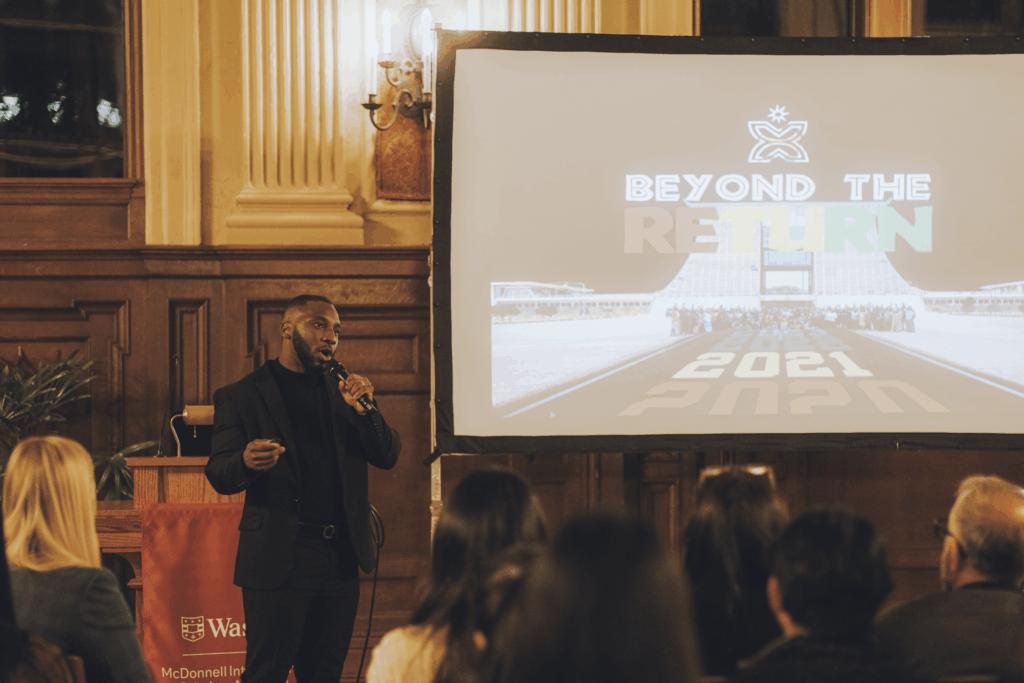
In 2019, the world paused to mark a somber anniversary — 400 years since the first recorded enslaved Africans arrived in Jamestown, Virginia. Ghana transformed that moment into an opportunity for healing and pride through the Year of Return, an initiative inviting the African diaspora to journey home to reconnect and rebuild. For decades, diasporans had made pilgrimages to West Africa, but earlier efforts lacked the scale, coordination, and global attention that this campaign achieved. The Year of Return changed that, uniting government, tourism, and culture into a global movement that drew over one million visitors to Ghana in 2019, a staggering 18 percent increase from the previous year (Ghana Tourism Authority, 2021).
What made Ghana’s effort distinct was its fusion of hospitality, history and sense of belonging. At its core, the campaign promoted “homecoming” and “reconnection,” not mere tourism. Ghana cast itself not as an exotic destination but as a place of identity, pride, and opportunity. Through the Ghana Tourism Authority, the government introduced visa-on-arrival incentives, revitalized heritage sites like Cape Coast and Elmina Castles, and hosted cultural festivals such as PANAFEST and Afrochella that welcomed diasporans as family (Boakye, 2021).
Unlike typical vacation spots where visitors arrive to relax and depart, Ghana’s initiative invited people to retrace ancestry and rebuild roots. For many, it was not tourism but restoration. Ghana’s Right of Abode law even allows people of African descent to live and work indefinitely in the country, a policy that transformed symbolic return into permanent belonging. Also through simplified citizenship pathways, thousands of African Americans have since relocated, opened businesses, and sought citizenship, finding in Ghana a home that felt emotionally and spiritually complete (The World, 2022).
The results were remarkable. In 2019, Ghana welcomed 1.13 million visitors, generating approximately US $3.3 billion in tourism revenue (Ghana Tourism Authority, 2021). Building on this momentum, the government launched Beyond the Return (2020–2030), a ten-year program with pillars such as Invest in Ghana and Diaspora Pathway to Ghana, turning a single-year celebration into a long-term strategy for development and cultural leadership (Travel Weekly, 2023).
Still, no initiative of this magnitude is without challenges. Critics note that increased diaspora demand has driven up rents and restaurant prices, making some urban areas unaffordable for locals (Harvard Kennedy School Student Review, 2020). Others report that goods are now priced in dollars, widening inequalities and raising concerns about who truly benefits (Al Jazeera, 2023). Yet even with these tensions, the broader gains are clear: local artisans, tour guides, and small businesses have experienced unprecedented demand; new creative industries have emerged; and diaspora investments continue to flow into real estate, education, and the arts.
Through its blend of commemoration and celebration spanning from solemn castle tours to vibrant all-night music festivals, Ghana captured the full emotional range of the African experience. It offered a space where memory met joy, redefining Africa’s long distorted image.
Ghana’s example has inspired others to follow suit. In Africa, nations such as Benin and Gabon are easing citizenship pathways for their diasporas, while globally, initiatives like Barbados’ We Gatherin’ and Jamaica’s Diaspora Program reflect similar efforts of cultural reconnection. Ghana’s Year of Return proved that hospitality and belonging can itself be a form of leadership, and that the true power of travel lies not in escape, but in return.