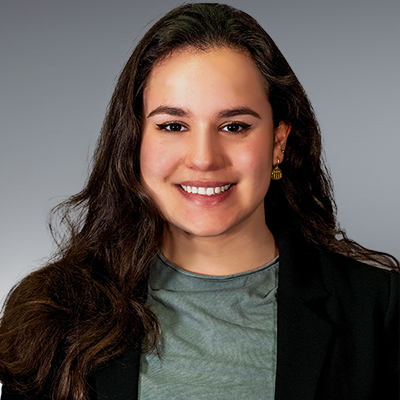
Maya graduated from the University of Chicago in 2024 with a Bachelor of Science in Biological Sciences with a specialization in immunology and a minor in immunoengineering. She joined Dr. Anthony Reder’s research group in the first quarter of her first year, where her projects focused on characterizing the gene and protein expression profiles of multiple sclerosis patients. Her work identified novel interferon therapy-specific responses and expanded the scope of known multiple sclerosis subtype biomarkers. Maya is currently pursuing her PhD in Immunology at Washington University in St. Louis.
Passionate about deciphering the language of the immune system, Maya wants to one day establish her own laboratory investigating the neuroimmune dynamics driving autoimmune diseases.
Maya is half Turkish and half Italian but spent her childhood across the world in Istanbul, London, Geneva, Ho Chi Minh City, and Singapore. She is a United World College alumna. Maya spends her free time improving her Hittite grammar, playing the NYT spelling bee, and exploring St. Louis.
Scholar Voices
Global Leadership Vision Op-Ed | The Collector’s Mindset
By Maya Olcer | November 2025
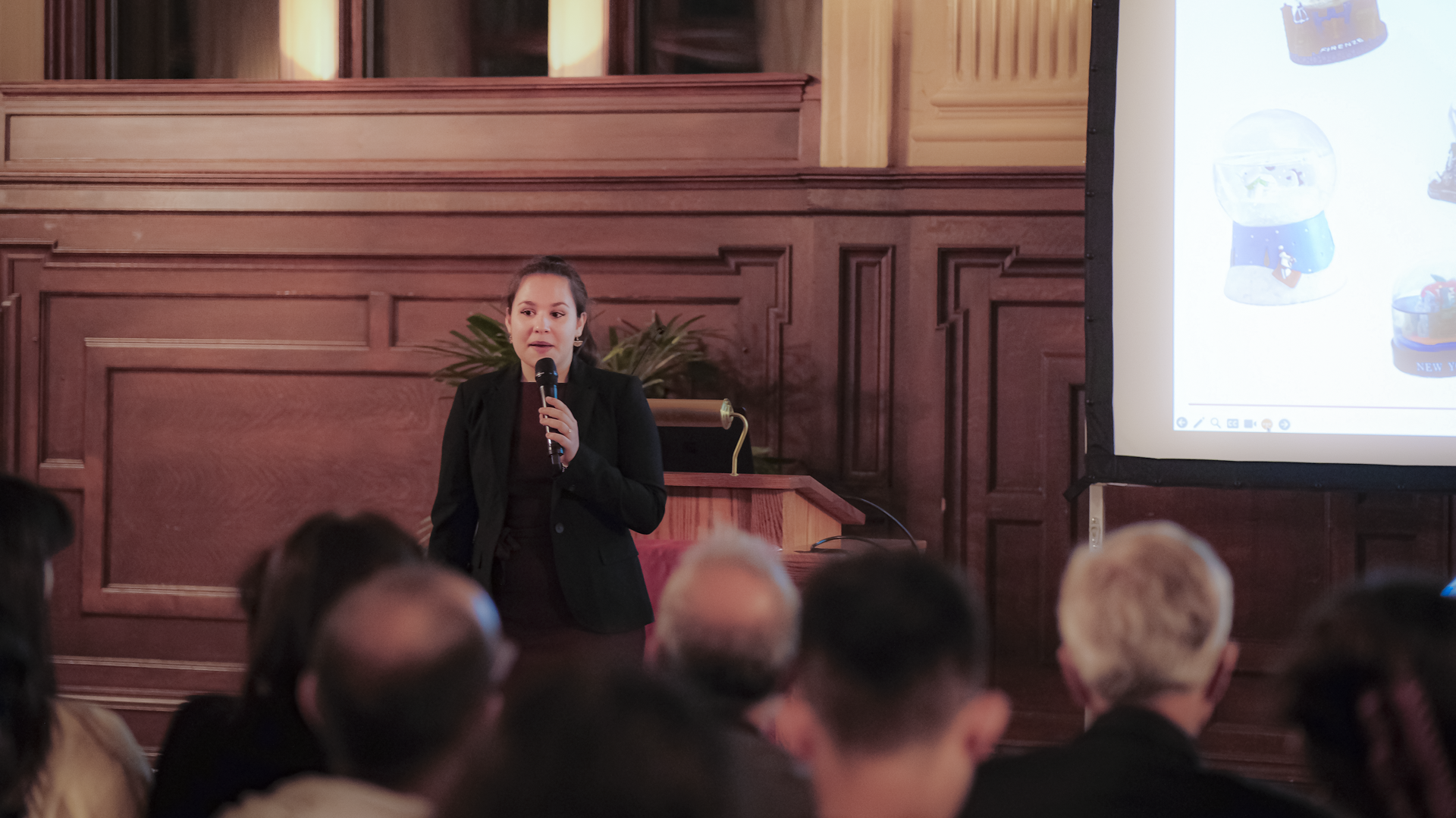
When I was ten, I lined my shelves with snow globes I collected across my multicultural upbringing; tiny worlds of glass and glitter frozen in time, each one a landmark of belonging. Every globe felt like a promise that a moment, a place, a feeling could be held still before it disappeared. Years later, as a scientist, I find myself chasing the same instinct on a larger scale: preserving fragments of knowledge before they vanish.
We live in an age that worships innovation. Every headline praises the next breakthrough, and being labeled a disruptor is the highest compliment. Progress is measured in speed. But when the world is sprinting forward, who safeguards what we leave behind? My philosophy of global leadership, the Collector’s Mindset, argues that true progress requires preservation: of knowledge, of culture, of memory.
Collecting is not simply nostalgia; it is stewardship. In science, archiving raw data and preserving open-access repositories ensure that discoveries can be reproduced and built upon. Yet studies show how fragile that stewardship is. One analysis of open-access publishing identified 174 journals that vanished from the internet between 2000 and 2019 because they lacked robust archiving (Laakso, Matthias, & Jahn, 2020). Services like the Keepers Registry now track which digital journals have no preservation arrangements, quietly flagging thousands of titles at risk. Even when materials appear to be published under “open-access” they are not safe by default: a 2018 case study of the PKP Preservation Network (Sprout & Jordan, 2018) found that small open-access journals survive only when they are intentionally copied across a distributed preservation network rather than left on a single server that can disappear overnight. What we fail to preserve, we lose not just physically but intellectually.
Some argue that in the era of artificial intelligence, preservation is slowly becoming obsolete and that language models can regenerate knowledge. But this belief mistakes imitation for understanding. Without human stewardship of truth, memory, and context, even intelligent systems risk amplifying our forgetfulness rather than our wisdom. AI can synthesize patterns, but only people can decide what is worth remembering.
To collect is to care. Whether safeguarding indigenous art, archiving genomic data, or curating community histories, leaders must see themselves as custodians of continuity. Preservation gives innovation its roots, it ensures that our rush to create does not sever us from the lessons, failures, and identities that make creation meaningful. Global leadership, then, is not only about generating new ideas but sustaining the ecosystem in which ideas can endure and flourish.
We can begin small: fund open-access databases, protect cultural archives, and teach young scientists and policymakers that to save knowledge is an act of creation and innovation. As I once did with my snow globes, we must learn to hold pieces of our shared world, not to resist change, but to remember why it matters.
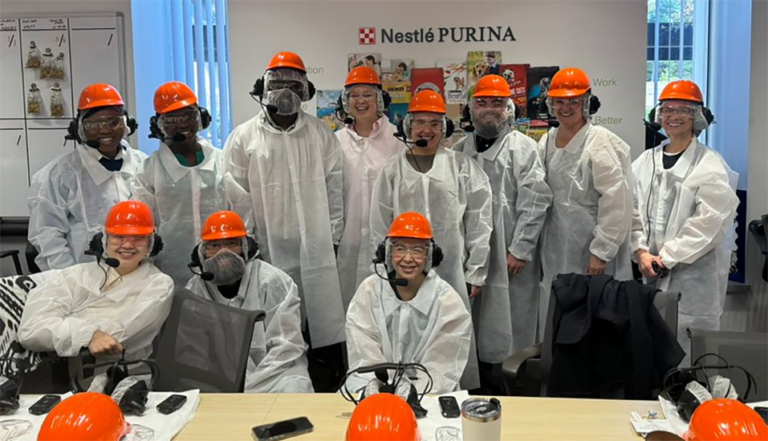
I had the privilege of visiting Nestlé Purina’s St. Louis Headquarters, an experience that profoundly broadened my perspective. One inspiring aspect was our deep dive into the Purina Institute’s R&D in nutrition science, particularly their research on microbiome and neurological health in pets. As a first-year PhD student in immunology, I was surprised—and genuinely excited to learn that Purina employs immunologists to advance pet health through nutrition. This opportunity illuminated career possibilities I hadn’t previously considered, highlighting how industry can be a dynamic space for scientific innovation and impact…
Maya Olcer