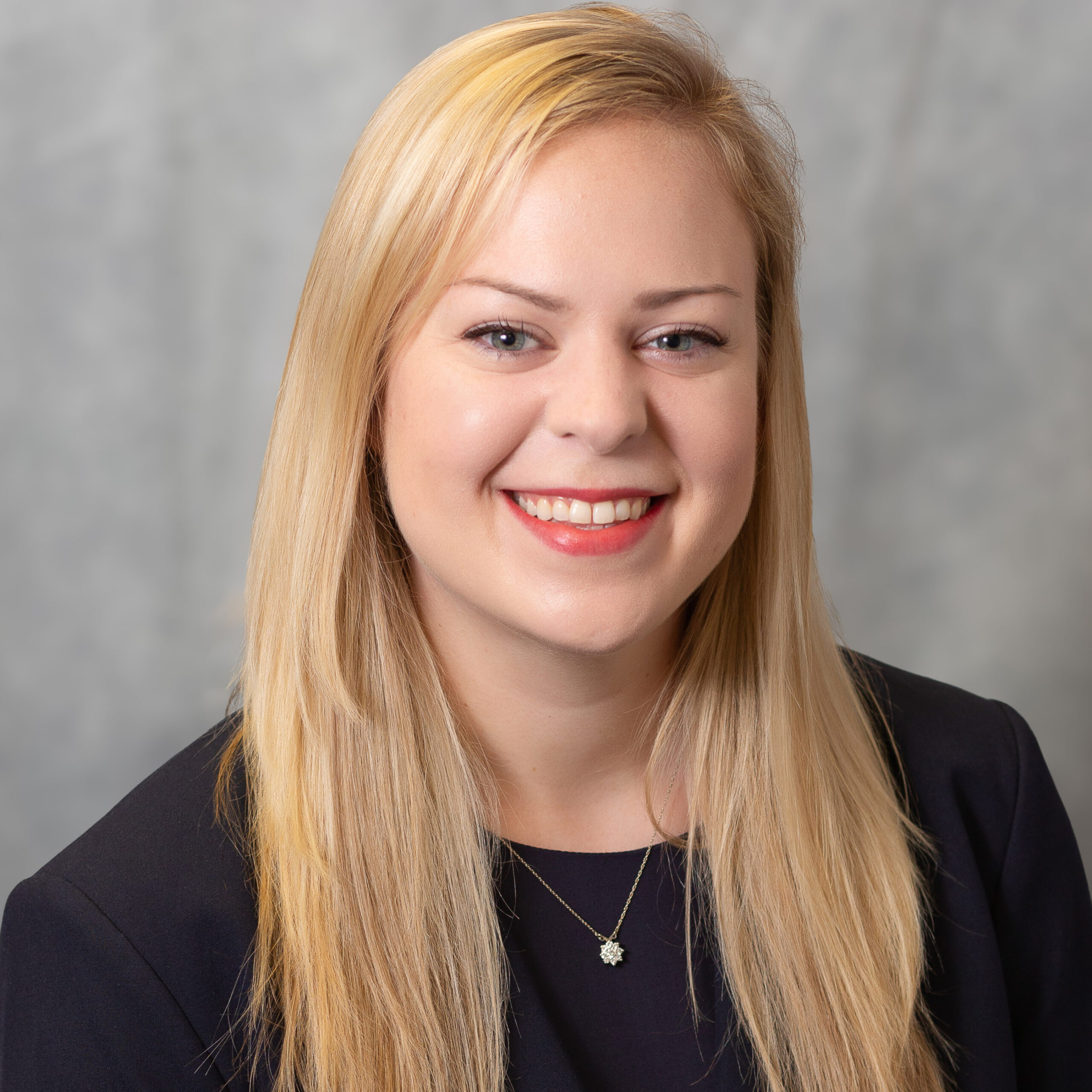
With over 20 years of experience in China, Sarah Meyers has a rich background in living, studying, and working in the region. She is currently pursuing a Master of Business Administration (MBA) at Olin Business School, Washington University in St. Louis. Over the past seven years, Sarah has dedicated her career to international education in China, a passion that began with her internship at Teach For China while studying at New York University (NYU).
Prior to her college studies, Sarah spent a year in Beijing focusing on Mandarin Chinese. During her junior year, she participated in NYU Shanghai’s study abroad program and completed an internship in the global marketing department at Capvision, an international consulting firm. Additionally, she served as a resident assistant for the inaugural class of NYU Shanghai, where she co-founded the acclaimed debate club, Collective Voice – More Than Debate. Sarah graduated magna cum laude with a bachelor’s degree in political science from Arizona State University.
Scholar Voices
Global Leadership Vision Op-Ed | Raised Between Worlds, Ready for the Teams of Tomorrow
By Sarah Meyers | November 2025
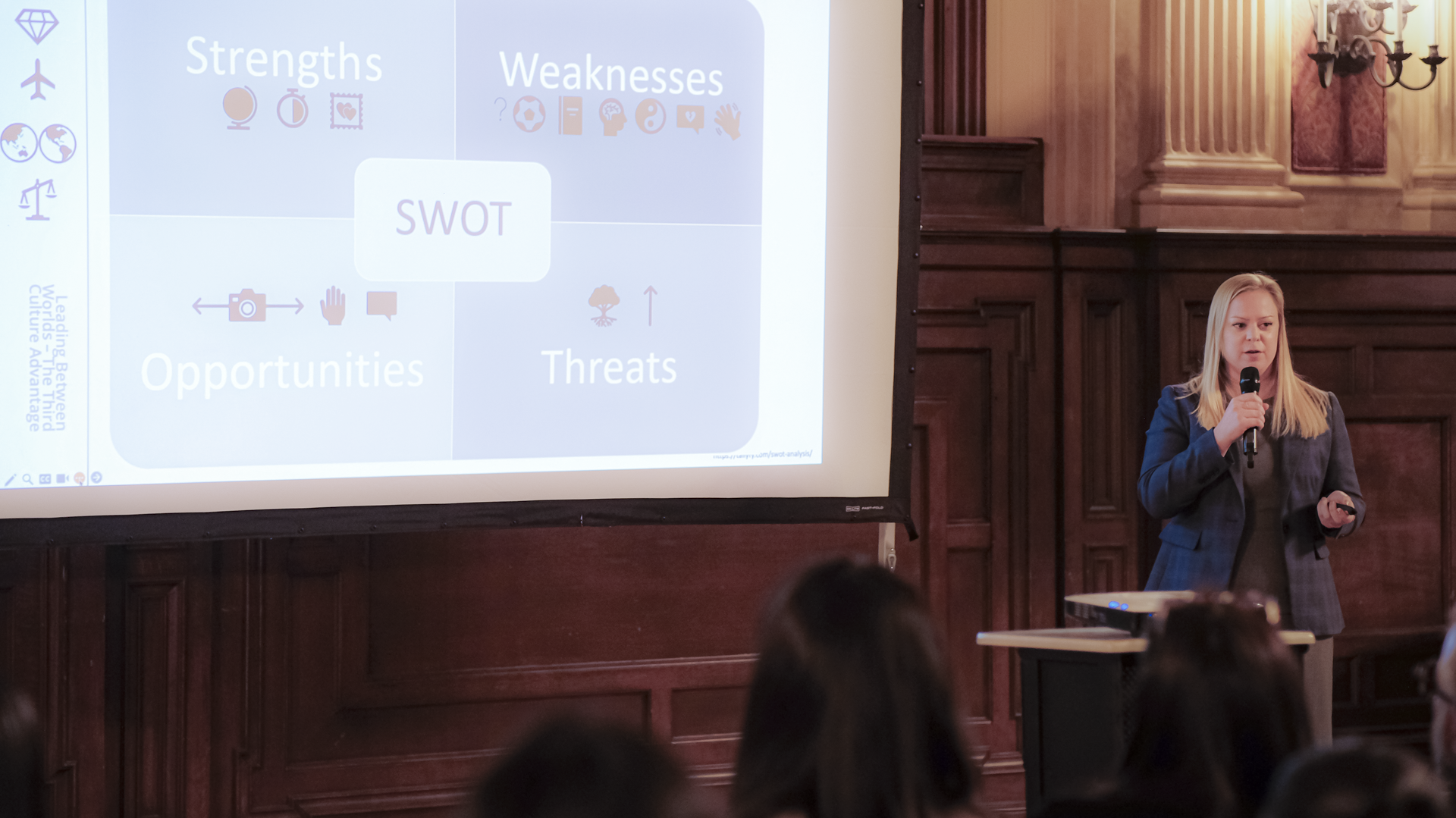
Growing up among worlds is more common than ever. Global citizens are invaluable in the modern workplace. Let’s call them Adult Third Culture Kids (TCKs). Some jobs that require intense local networks see Adult TCKs as lacking long-term community roots and lacking in authenticity. But leaders should turn to and learn from TCKs because they bring cultural intelligence, empathy, adaptability, and cross-cultural communication to the workplace. Leaders need to learn to incentivize these global citizens to join their teams – because they build trust across differences.
Authenticity is something that grows over time, but when bicultural identity is integrated and people proactively disclose identity cues, those penalties drop, while trust and perceived warmth increase. TCKs, because they lived and adapted abroad, boost creativity and innovation. That means companies can get more (and better) ideas. A bicultural experience raises the ability to hold multiple viewpoints and synthesize them. This predicts stronger team performance and more workplace innovations. As a group of people who are now adults and who have spent key developmental years in a culture different from their parents’, they formed deep ties to host cultures while their passport culture receded. Does this really make them perceived as less authentic?
Adult TCKs often move frequently, experiencing high mobility and rapid change (as described by David Pollock and Ruth Van Reken). TCK is an umbrella term, but they are distinct by the fact that as kids they experienced a sense of “belonging” in a third culture that is not defined by their passport country. This leads to a feeling of being “from nowhere” or “home is everywhere” all at once. For TCKs, mentors disappear with an airplane ride. Goodbyes arrive mid-semester. Lives fit into two suitcases. Without a ready-made network in every new place, TCKs lose but also build relationships fast. As adults, they reconcile recurring goodbyes with a habit of continuous renewal. They become expert cultural brokers. They learn to make do with continuously changing circumstances and to persevere through constant reintegration. In the West, people often see bicultural kids who code-switch as less authentic, less likeable, and less trustworthy, according to Alex L. West in the National Library of Medicine Journal. This might hinder leadership, sales, and stakeholder influence, not to mention retention of employees who were raised as TCKs.
But despite an apparent uprootedness or perceived lack of authenticity, their tenacity can help organizations thrive in the short and medium run. In the workplace, TCKs have the skills to map unfamiliar terrain fast. They read rooms before they read slides. Code-switching becomes context-switching: what’s welcome, what’s risky, what lands as humor. They connect people who rarely meet because they have high cultural metacognition which improves communication quality and affect based trust. They spot patterns across markets and cultures. That agility fuels performance under pressure, on new teams, and on steep learning curves. TCKs are living proof that resilient, multi-hyphenated identity is a competitive asset.
This isn’t just lore. BBC data on 200 TCKs shows early mobility of first move before nine and language range of 85% bilingual, or more. They are also more likely to achieve higher levels of education. Thus, TCKs deployment for maximum return on investment: avoid local marketing roles, as these are dependent on deeply understanding the local ties and the local consumer. If perceived authenticity is mission critical, TCKs should bypass those types of positions for more cross-regional work where translation changes outcomes. Our futurist global citizens can join teams working on client facing growth in avenues as diverse as market entry or global key accounts spanning regions and time zones. They will achieve success, despite naysayers and critics, as they’ve become a cornerstone of the global economy; managing their work will become critical going forward.
Sarah Meyers Wins Presentation Competition at ROMBA Conference
October 2025
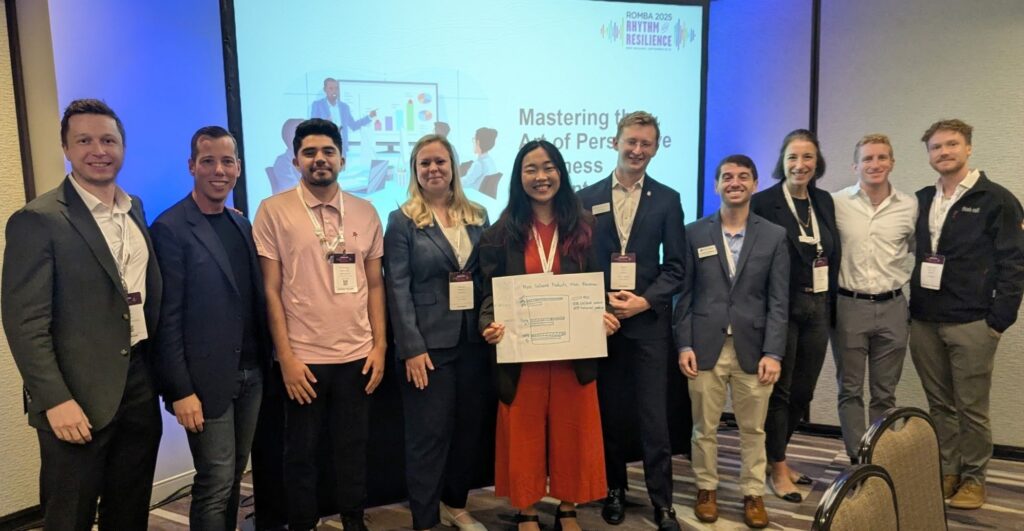
Sarah Meyers, a 2024 Cohort McDonell Scholar and MBA student in Olin Business School, and her team of fellow MBA students from various universities claimed first place in a presentation competition hosted by ThinkCell Software and Bain & Company at the Reaching Out MBA (ROMBA) Conference.
Sarah and her team presented a strategic solution to a company’s expansion and revenue generation problem, impressing the judges and earning a monetary reward. Highlighting her experience, Meyers said, “Collaborating with such talented MBAs was incredibly rewarding, and I am thrilled with our achievement.”
Join us in congratulating Sarah on this wonderful accomplishment! This victory underscores Sarah’s exceptional skills and her ability to drive impactful business solutions.
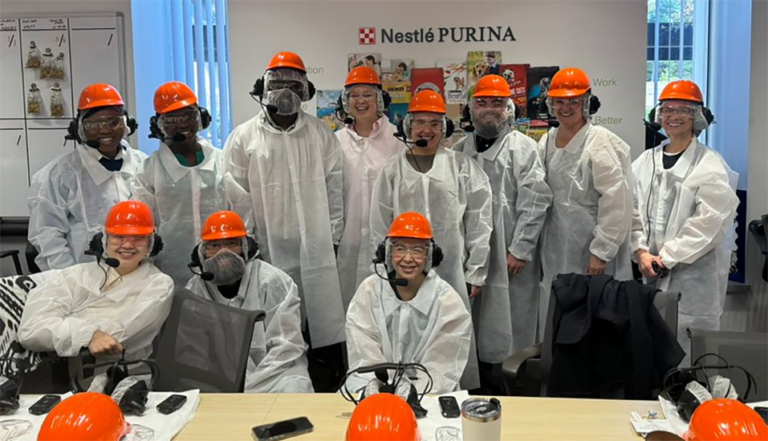
It was great to hear the strong values and mission that Purina shares with their consumers and business partners. The coordinators and staff members, from Operations to HR to R&D, inspired me to think big – to go beyond what would be expected of a consumer packaged goods pet nutrition company. The vision of unconditional love between the end consumer, the pet, and the customer, us, translates into a very viable, relatable message that reminded me how important a mission and vision are to the success of a corporation…
Sarah Meyers